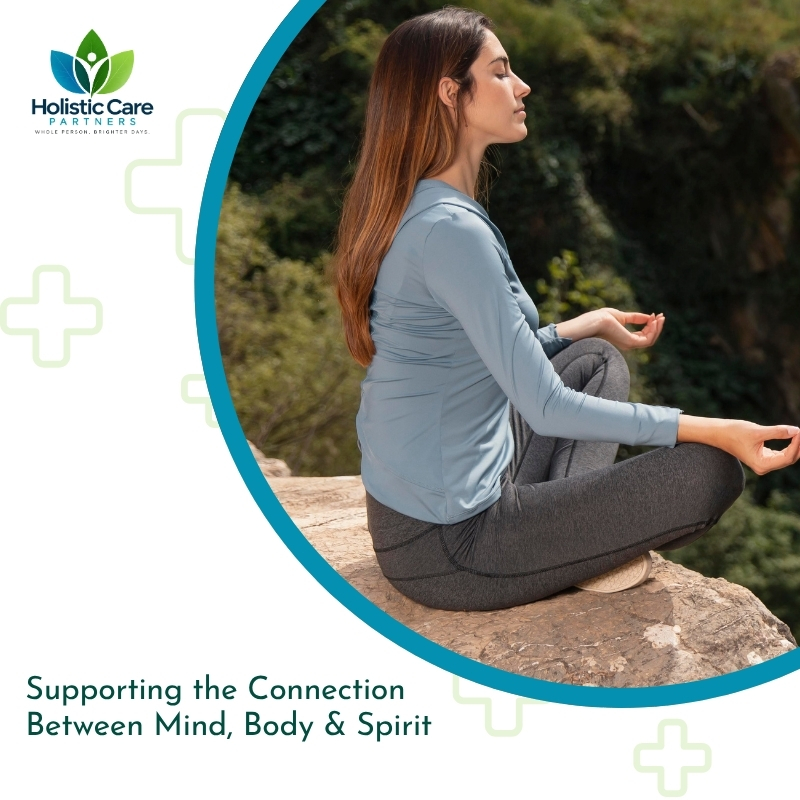
Wellness is about more than addressing a single symptom or health concern. The way we move, eat, rest, manage stress, connect with others, and care for our emotional well-being can all contribute to how we experience our health.
At Holistic Care Partners, we embrace a whole-person approach that recognizes the connection between mind, body, and spirit. Our Holistic Wellness Programs are designed to complement—not replace—medical care by giving patients additional opportunities to participate in activities that support relaxation, healthy living, personal well-being, and community connection.
What Does Holistic Wellness Mean?
A holistic approach considers the person as a whole rather than focusing exclusively on one aspect of health.
Medical care remains essential for diagnosing, treating, and managing health conditions. Holistic wellness programs can work alongside that care by helping individuals explore supportive practices and healthier routines that may contribute to their overall quality of life.
For one person, that may mean learning meditation. For another, it could involve attending a healthy aging seminar, participating in a wellness challenge, or connecting with others through a community support group.
There is no single path to wellness. The goal is to help individuals discover practices that are meaningful, enjoyable, and appropriate for them.
Understanding Distance Reiki Healing
A Gentle Approach to Relaxation, Balance, and Well-Being
What is Distance Reiki?
Distance Reiki is a gentle, non-invasive complementary wellness practice that originated from the Japanese tradition of Reiki. The word Reiki is commonly described as referring to “universal life energy.”
Unlike an in-person Reiki session, Distance Reiki does not require the practitioner and participant to be in the same physical location. The practitioner uses traditional Reiki techniques, focused intention, and meditation while the participant relaxes comfortably in their own home.
Distance Reiki does not require physical contact, exercise, special equipment, or any particular religious or spiritual belief. You simply need a comfortable and quiet place where you can relax during your scheduled session.
What Is the Distance Reiki Approach?
Distance Reiki takes a whole-person approach, recognizing the connection between physical comfort, emotional well-being, mental relaxation, and personal sense of balance.
During a scheduled Distance Reiki session, the practitioner focuses their Reiki practice on the participant while they are resting remotely. You may choose to lie down, sit comfortably, close your eyes, listen to relaxing music, or simply remain quiet.
There is nothing you need to accomplish during the session. Your role is simply to become comfortable, relax, and allow yourself this dedicated time for rest and self-care.
What Can You Experience During Distance Reiki?
Everyone experiences Distance Reiki differently. There is no “right” or “wrong” way to experience a session.
Some people report feeling:
- Deeply relaxed or peaceful
- Calm and emotionally centered
- A sense of warmth, comfort, or tranquility
- Tingling, warmth, heaviness, or lightness in different areas of the body
- Less mentally overwhelmed or tense
- Rested or refreshed following the session
Some people may fall asleep during a session, while others remain awake and relaxed. You may also experience no particular physical sensation at all. That is completely normal and does not mean you are doing anything incorrectly.
How Can Distance Reiki Support Your Well-Being?
Distance Reiki is offered as a complementary wellness practice, with the primary purpose of supporting relaxation, stress management, and emotional well-being.
When we are dealing with illness, medical appointments, caregiving responsibilities, changes in our health, or the stresses of everyday life, it can sometimes be difficult to give ourselves permission to simply rest.
A Distance Reiki session creates intentional time to slow down, become quiet, relax, and focus on yourself and your well-being.
Some people incorporate Reiki into their overall self-care routine because they find the experience comforting and relaxing.
What Happens During a Distance Reiki Session?
Before your session, the practitioner may briefly explain the process and answer any questions you have.
At your scheduled time:
- Find a quiet and comfortable place in your home.
- Sit or lie down in a position that feels comfortable.
- Reduce distractions and silence your phone if possible.
- Close your eyes if you feel comfortable doing so.
- Take a few slow, natural breaths and allow your body to relax.
- The Reiki practitioner will conduct your session remotely for the scheduled period.
- When the session is complete, take a few moments before returning to your normal activities.
No travel is necessary, and you can participate from the comfort and privacy of your own home.
A Gentle Invitation to Experience Distance Reiki
If you have never experienced Reiki before, you do not need to fully understand it or have any particular expectations.
Simply come as you are.
Allow yourself a quiet moment to rest, breathe, and receive a supportive wellness experience.
There is no pressure and no expectation. Participation is completely voluntary, and you can decide for yourself whether Distance Reiki is something you would like to include in your personal wellness and self-care routine.
Give Yourself a Moment of Peace
Sometimes caring for your well-being begins with something simple: giving yourself permission to slow down and receive a moment of calm.
We warmly invite you to experience a Distance Reiki Wellness Session from the comfort of your home.
Guided Meditation: Creating Moments of Calm
Our lives can be filled with appointments, responsibilities, family commitments, and constant distractions. Guided meditation provides an opportunity to intentionally slow down and focus attention on the present moment.
Sessions may incorporate breathing, body awareness, visualization, or other mindfulness techniques.
Meditation doesn’t have to be complicated or time-consuming. Even a brief guided practice can introduce techniques that participants may later incorporate into their daily routines.
Gratitude & Mindfulness Practices
Wellness can also involve becoming more aware of the positive moments and experiences that are sometimes overlooked during a busy day.
Gratitude practices encourage individuals to intentionally recognize things they appreciate, while mindfulness encourages greater awareness of the present moment.
These practices may include gratitude journaling, guided reflection, mindful breathing, or simply setting aside time to recognize positive experiences and connections.
The goal is not to ignore life’s challenges. Instead, these practices offer another way to develop awareness, perspective, and intentionality in everyday life.
Healthy Aging Is About More Than Getting Older
Healthy aging involves supporting the habits, knowledge, and social connections that can help us remain engaged in life as we grow older.
Educational programs may explore topics such as:
- Staying physically active
- Maintaining mobility and balance
- Healthy nutrition and hydration
- Emotional wellness and stress management
- Staying socially connected
- Building healthy daily routines
- Understanding preventive health and wellness
Healthy aging looks different for everyone. Education can help individuals identify practical steps that support their personal wellness goals and complement recommendations from their healthcare providers.
Wellness Workshops & Educational Seminars
Reliable health information can help people make more informed choices.
Our wellness workshops and health seminars may bring patients and community members together to learn about topics related to nutrition, movement, mindfulness, healthy aging, stress management, preventive wellness, and other areas of healthy living.
These programs are designed to make wellness education approachable and relevant to everyday life.
The Importance of Community & Social Connection
Wellness doesn’t always happen individually.
Connecting with others, sharing experiences, learning together, and feeling part of a community can be meaningful components of overall well-being.
Community support groups can create opportunities for individuals with shared experiences or wellness interests to connect in a supportive environment.
For some participants, simply knowing that others are working toward similar goals can provide valuable encouragement and motivation.
Seasonal Wellness Challenges: Making Healthy Living Engaging
Sometimes we need a little extra motivation to turn healthy intentions into everyday habits.
Seasonal wellness challenges can make healthy living more interactive and enjoyable by encouraging participants to work toward achievable goals over a defined period.
Depending on the program, challenges might focus on areas such as:
- Increasing daily movement
- Drinking more water
- Practicing mindfulness
- Making healthier food choices
- Improving sleep routines
- Practicing gratitude
- Participating in community activities
The emphasis is on participation, consistency, and positive lifestyle changes—not perfection.
Creating Your Own Path to Wellness
One of the most important principles of holistic wellness is recognizing that everyone’s needs and goals are different.
Some people may enjoy meditation and mindfulness. Others may prefer educational workshops, community activities, or healthy aging programs. Many may benefit from exploring several approaches and discovering which practices fit naturally into their lives.
At Holistic Care Partners, our role is to provide opportunities, education, and supportive wellness experiences that can complement each person’s broader healthcare journey.
Holistic Wellness Programs May Include:
- Reiki wellness sessions
- Guided meditation
- Gratitude and mindfulness practices
- Healthy aging education
- Wellness workshops
- Community support groups
- Health and wellness seminars
- Seasonal wellness challenges
A More Complete Approach to Well-Being
Whole-person wellness recognizes that caring for our health can extend beyond the traditional medical setting.
Taking time to relax, learning something new, connecting with others, practicing gratitude, becoming more mindful, or participating in a wellness activity can all become part of a broader commitment to healthier living.
At Holistic Care Partners, we believe in supporting the mind, body, and spirit while keeping medical care at the center of each patient’s health needs.
Your wellness journey is personal. Our goal is to provide more ways to support it.
Holistic wellness programs are intended to complement, not replace, appropriate medical or mental health care. These services are not intended to diagnose, treat, cure, or prevent medical conditions. Patients should continue to follow the recommendations and treatment plans provided by their qualified healthcare professionals.
Recent Posts
-
 Knowledge Is Power: Health Education for Better Everyday Choices
-
 Holistic Wellness: Supporting the Connection Between Mind, Body & Spirit
-
 Mindfulness & Emotional Wellness: Caring for the Whole Person
-
 Movement Is Medicine: Staying Active for Strength, Balance & Better Health
-
 Nutrition & Healthy Living: Building Better Health One Choice at a Time