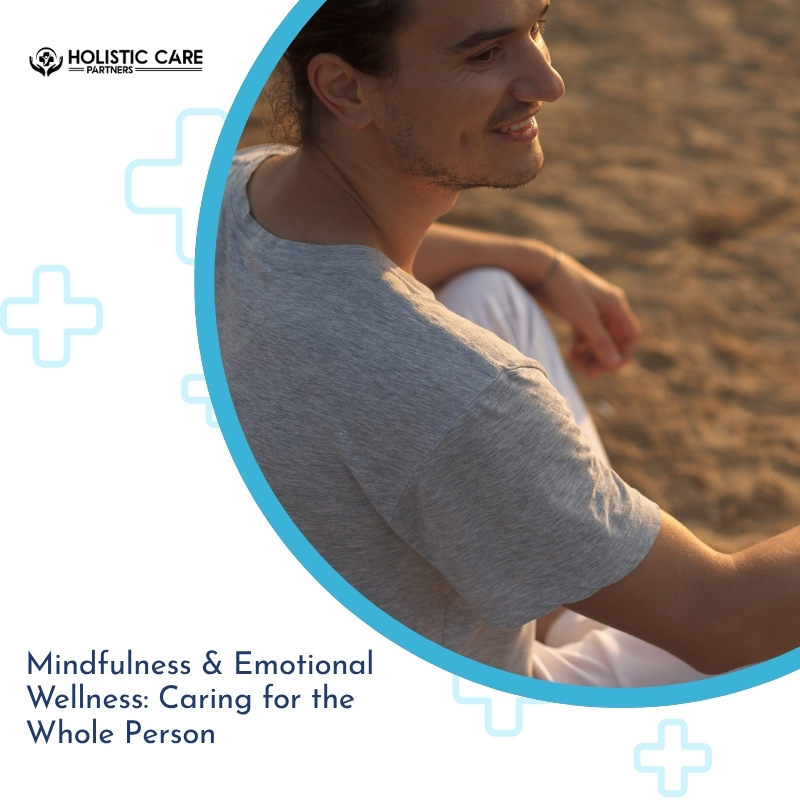
Health is more than what we can measure during a medical appointment. How we manage stress, respond to everyday challenges, rest, and care for our emotional well-being can all play an important role in how we feel and function.
At Holistic Care Partners, we believe that supporting emotional well-being is an essential part of whole-person health. Our Mindfulness & Emotional Wellness programs provide education, practical techniques, and supportive wellness practices designed to help patients manage stress, develop healthier routines, and build resilience.
What Is Emotional Wellness?
Emotional wellness doesn’t mean feeling happy all the time or eliminating every source of stress. Stress is a normal part of life.
Instead, emotional wellness involves becoming more aware of how we feel, understanding how stress affects us, and developing healthy strategies for responding to life’s challenges.
Simple practices such as mindful breathing, meditation, relaxation techniques, and lifestyle changes can become useful tools for supporting overall well-being.
Understanding the Mind-Body Connection
Our mental, emotional, and physical health are closely connected.
Stress can affect how we sleep, eat, concentrate, and interact with others. It can also influence our motivation to exercise, prepare healthy meals, attend appointments, or follow other healthy routines.
For this reason, supporting emotional wellness can complement other areas of healthcare.
At Holistic Care Partners, our approach recognizes that caring for the whole person means considering both physical and emotional well-being.
Mindfulness: Being Present in the Moment
Mindfulness is the practice of intentionally paying attention to the present moment.
Our minds often spend significant amounts of time thinking about what happened yesterday or worrying about what might happen tomorrow. Mindfulness encourages us to bring our attention back to what is happening right now.
This can involve something as simple as noticing your breathing, paying attention to physical sensations, or becoming more aware of your thoughts without immediately reacting to them.
With regular practice, mindfulness can become a helpful part of managing everyday stress and creating moments of calm.
Meditation Doesn’t Have to Be Complicated
Some people imagine meditation requires sitting silently for long periods of time. In reality, meditation can be practiced in many different ways and for different lengths of time.
A guided meditation may last only a few minutes and focus on breathing, relaxation, body awareness, or another simple point of attention.
The goal isn’t necessarily to stop thinking. Instead, meditation can help us practice observing our thoughts and gently returning our attention to the present.
The Power of Breathing Exercises
Breathing happens automatically, but intentionally slowing down and paying attention to our breathing can be a simple relaxation technique.
Guided breathing exercises may involve taking slow, comfortable breaths and focusing attention on the rhythm of inhaling and exhaling.
One of the advantages of breathing exercises is their accessibility. They can often be practiced while sitting at home, before an appointment, during a break, or whenever you want to create a brief moment of calm.
Developing Healthy Ways to Manage Stress
We may not be able to remove every stressful situation from our lives, but we can develop healthier ways to respond to them.
Stress management education can help individuals identify sources of stress and explore practical strategies for managing them.
These strategies may include:
- Creating healthier daily routines
- Practicing mindfulness or meditation
- Using breathing and relaxation techniques
- Incorporating appropriate physical activity
- Prioritizing adequate rest
- Setting realistic goals
- Making time for enjoyable activities and social connections
- Recognizing when additional support may be helpful
The objective isn’t perfection. It’s about building a collection of healthy tools that can be used when life becomes challenging.
Guided Relaxation: Giving Yourself Permission to Slow Down
In busy lives, relaxation is often treated as something we’ll get to “when we have time.”
But intentionally creating moments to slow down can be an important part of wellness.
Guided relaxation practices may use breathing, visualization, gentle body awareness, or other techniques to help participants release tension and focus their attention.
Even short relaxation practices can provide an opportunity to disconnect temporarily from everyday demands and become more aware of how the body and mind are feeling.
Lifestyle Coaching for Whole-Person Wellness
Emotional wellness is connected to many everyday habits.
Sleep, nutrition, hydration, physical activity, social interaction, and how we structure our daily routines can all contribute to overall well-being.
Lifestyle coaching helps individuals look at the bigger picture and identify realistic opportunities for healthier routines.
Rather than trying to change everything at once, the focus can be on small, sustainable improvements that fit into everyday life.
Wellness Education Empowers Better Choices
Understanding wellness is an important step toward making informed decisions about your health.
Educational programs can help patients explore topics related to stress management, mindfulness, healthy routines, movement, nutrition, sleep, and other components of whole-person wellness.
The more we understand how everyday habits can influence our well-being, the better prepared we are to make choices that support our individual health goals.
Building Resilience One Day at a Time
Resilience is our ability to adapt and continue moving forward when we encounter challenges.
Like many aspects of wellness, resilience can be supported through practice. Developing healthy coping strategies, maintaining supportive relationships, taking care of our physical health, and learning techniques for managing stress can all contribute to how we respond when life becomes difficult.
At Holistic Care Partners, our goal is to provide patients with practical wellness tools they can incorporate into their daily lives.
Mindfulness & Emotional Wellness Programs May Include:
- Mindfulness and meditation
- Breathing exercises
- Stress management techniques
- Guided relaxation
- Lifestyle coaching
- Wellness education
Make Emotional Wellness Part of Your Health Journey
Taking care of yourself means caring for both your body and your emotional well-being.
You don’t need to completely change your lifestyle to begin. A few minutes of mindful breathing, a short guided relaxation exercise, or developing one healthier daily habit can be a meaningful place to start.
Small moments of mindfulness can become healthier habits—and healthier habits can support a more balanced approach to life.
At Holistic Care Partners, we’re committed to supporting whole-person wellness by helping patients discover practical ways to care for their physical and emotional well-being.
Mindfulness, relaxation, lifestyle coaching, and wellness education are supportive wellness services and are not substitutes for professional mental health evaluation, diagnosis, or treatment. Individuals experiencing significant or persistent emotional distress should speak with an appropriate healthcare or mental health professional.
Recent Posts
-
 Knowledge Is Power: Health Education for Better Everyday Choices
 -
 Holistic Wellness: Supporting the Connection Between Mind, Body & Spirit
 -
 Mindfulness & Emotional Wellness: Caring for the Whole Person
 -
 Movement Is Medicine: Staying Active for Strength, Balance & Better Health
 -
 Nutrition & Healthy Living: Building Better Health One Choice at a Time