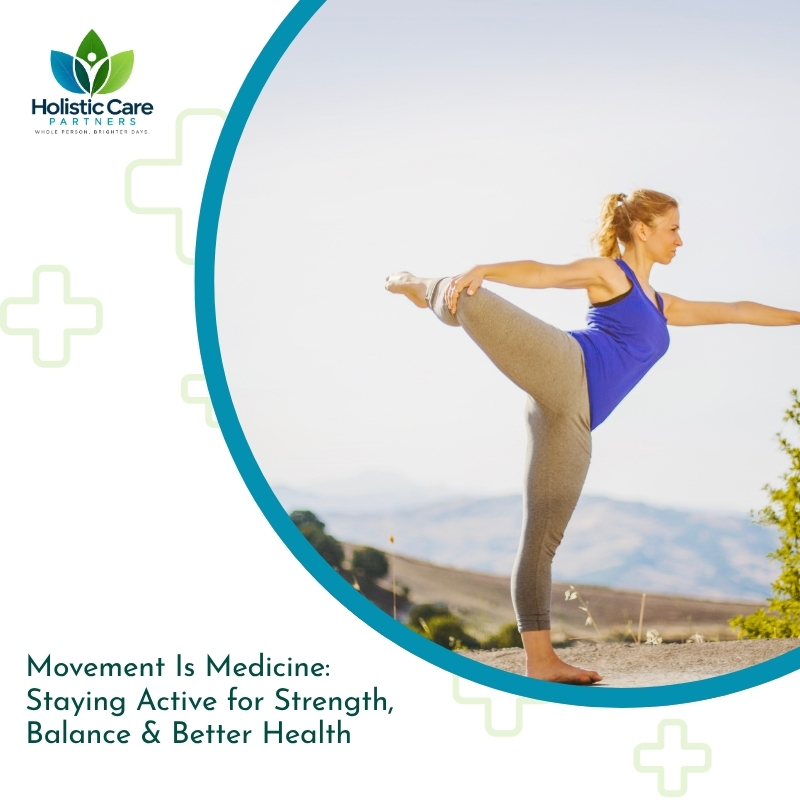
Staying active is one of the most important things we can do to support our health and independence. But exercise doesn’t have to mean running, lifting heavy weights, or completing an intense workout.
At Holistic Care Partners, we believe that movement is medicine—and every body deserves the opportunity to move in ways that are safe, enjoyable, and appropriate for their individual abilities.
Our Movement & Exercise Programs are designed to make physical activity more accessible while helping participants work toward improved strength, flexibility, balance, mobility, and confidence.
Why Movement Matters at Every Age
Regular physical activity can support many aspects of overall wellness. Depending on an individual’s health and abilities, staying active may help maintain mobility, support muscle strength, improve flexibility and balance, and make everyday activities easier.
Movement can also provide opportunities for social interaction, relaxation, and simply having fun.
Most importantly, exercise doesn’t have to look the same for everyone. Someone who enjoys a walking program may have very different needs from someone who benefits from Chair Yoga or low-impact exercises.
The goal is to find ways to keep moving that work for you.
Chair Yoga: Movement with Additional Support
Chair Yoga adapts traditional yoga movements so participants can perform exercises while seated or using a chair for support.
This makes it an approachable option for individuals who may have difficulty getting up and down from the floor or who prefer additional stability while exercising.
Classes may incorporate gentle stretches, controlled movements, and breathing exercises designed to promote flexibility, mobility, and relaxation.
Gentle Yoga: Strength, Flexibility & Relaxation
Gentle Yoga emphasizes slower movements, stretching, breathing, and comfortable poses rather than strenuous exercise.
Participants can work on flexibility and body awareness while enjoying an activity that also encourages relaxation and mindfulness.
Exercises can often be modified according to different mobility and fitness levels.
Tai Chi: Slow Movement with Powerful Benefits
Tai Chi uses slow, controlled movements combined with breathing and concentration.
Because movements are generally performed gradually and intentionally, Tai Chi can be particularly useful for individuals interested in working on coordination, balance, flexibility, and body awareness.
It can also provide a relaxing way to incorporate more movement into the day.
Chair Zumba: Exercise Can Be Fun
Movement shouldn’t feel like a chore.
Chair Zumba brings music, rhythm, and energy into an exercise program that can be adapted for participants who prefer or require a seated format.
It’s an opportunity to get moving, enjoy music, interact with others, and make physical activity something to look forward to.
Low-Impact Fitness for Everyday Wellness
Low-impact exercise is designed to keep the body moving while minimizing excessive stress on the joints.
Classes may incorporate gentle cardiovascular activity, strength exercises, coordination, and functional movements. Depending on individual abilities, exercises can often be modified to make participation more comfortable and accessible.
Stretching & Flexibility
Everyday activities—from reaching for something on a shelf to getting dressed—depend on mobility and flexibility.
Stretching classes focus on gentle movements that help participants maintain or improve their range of motion. Regular stretching may also help reduce stiffness and make movement feel more comfortable.
Balance & Fall Prevention
Maintaining good balance becomes increasingly important as we age.
Balance and fall-prevention exercises can focus on coordination, stability, lower-body strength, and confidence with everyday movement.
For older adults in particular, practicing appropriate balance exercises may be an important component of maintaining independence and reducing fall risk.
Strength & Mobility for Daily Activities
Strength isn’t only about lifting weights. We rely on our muscles throughout the day to stand up, walk, climb stairs, carry groceries, and perform countless other activities.
Strength and mobility exercises can be adapted to different ability levels and may focus on movements that support everyday function.
The objective is to help participants continue doing the things that matter to them as safely and independently as possible.
Walking: One of the Simplest Ways to Stay Active
Walking is a simple and accessible form of physical activity for many people.
A structured walking program can provide encouragement, consistency, and opportunities to gradually incorporate more activity into everyday life.
Walking with others can also turn exercise into a social activity, making it easier—and more enjoyable—to stay motivated.
Guided Breathing & Relaxation
Wellness isn’t only about how much we move. Knowing when to slow down can be important, too.
Guided breathing and relaxation exercises can help participants become more aware of their breathing, release tension, and create moments of calm.
These practices may be incorporated into movement classes or offered as part of a broader wellness routine.
Finding the Right Movement for You
You don’t have to be an athlete to benefit from movement. You simply need to start at a level that is appropriate for you.
At Holistic Care Partners, our wellness programs are built around the idea that physical activity should be accessible, adaptable, and enjoyable.
Movement & Exercise Programs May Include:
- Chair Yoga
- Gentle Yoga
- Tai Chi
- Chair Zumba
- Low-Impact Fitness
- Stretching & Flexibility Classes
- Balance & Fall Prevention
- Strength & Mobility Exercises
- Walking Programs
- Guided Breathing & Relaxation
Keep Moving Toward Better Health
Whether your goal is to become more active, improve flexibility, work on balance, maintain strength, or simply enjoy moving with others, finding the right activity can make an important difference.
Every movement counts. Every ability matters. And it’s never too late to find an enjoyable way to become more active.
At Holistic Care Partners, we’re here to help make movement a positive and accessible part of your journey toward healthier living.
Exercise and wellness programs should be appropriate for each individual’s health status and physical abilities. Participants with medical conditions, mobility limitations, or other health concerns should consult their healthcare provider before beginning a new exercise program.
Recent Posts
-
 Knowledge Is Power: Health Education for Better Everyday Choices
 -
 Holistic Wellness: Supporting the Connection Between Mind, Body & Spirit
 -
 Mindfulness & Emotional Wellness: Caring for the Whole Person
 -
 Movement Is Medicine: Staying Active for Strength, Balance & Better Health
 -
 Nutrition & Healthy Living: Building Better Health One Choice at a Time