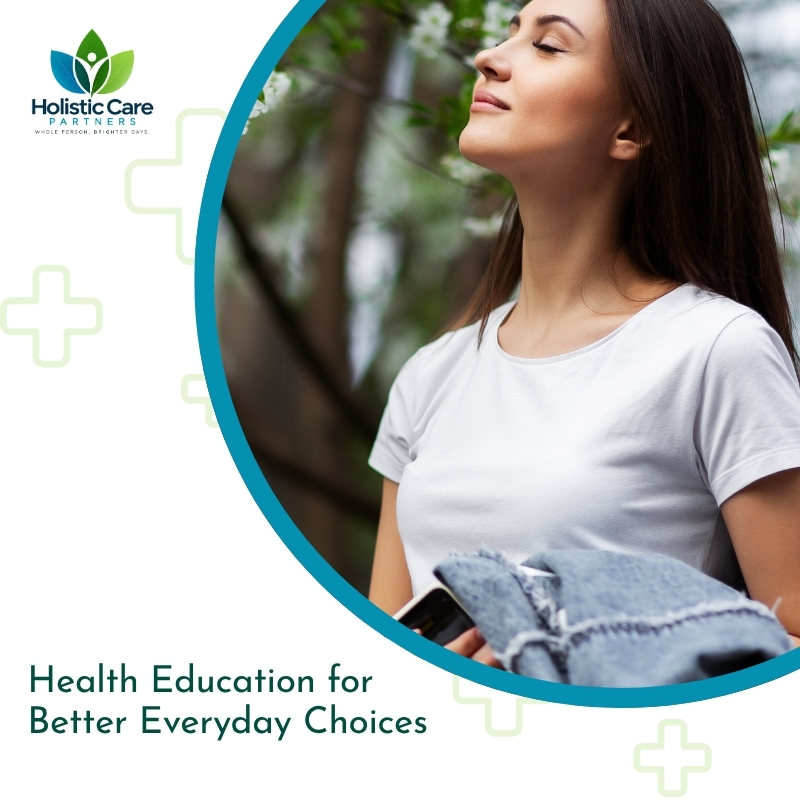
Understanding your health can make it easier to take an active role in caring for yourself and your family. From knowing what your blood pressure numbers mean to learning how nutrition can support diabetes management, reliable health education can turn complicated information into practical everyday choices.
At Holistic Care Partners, we believe that knowledge empowers healthier choices. Our Health Education & Community Classes are designed to help patients, families, and caregivers better understand important health topics, develop practical wellness skills, and feel more confident participating in their healthcare.
Why Health Education Matters
A healthcare provider may recommend eating differently, becoming more active, monitoring blood pressure, improving sleep, or making other lifestyle changes. But knowing what to do is only the beginning.
People also need to understand why those recommendations matter and how to incorporate them into everyday life.
Health education can help bridge that gap.
Through approachable classes, workshops, and community programs, participants can learn more about chronic disease management, preventive health, nutrition, healthy aging, stress reduction, and other topics that affect their well-being.
Diabetes Education: Understanding Everyday Choices
Living with diabetes often involves making decisions throughout the day about food, physical activity, medications, and blood sugar monitoring.
Diabetes education can help patients better understand their condition and the role everyday habits may play in supporting their medical care plan.
Educational topics may include nutrition basics, understanding carbohydrates, physical activity, monitoring, and questions patients may want to discuss with their healthcare providers.
The goal is to help individuals become more informed and engaged participants in their care.
Heart-Healthy Living
Supporting cardiovascular health often involves a combination of medical care and healthy lifestyle habits.
Heart-health education may explore areas such as balanced nutrition, appropriate physical activity, stress management, maintaining a healthy weight, avoiding tobacco, and understanding common cardiovascular risk factors.
Small changes can add up. Learning how everyday choices relate to heart health can help individuals identify realistic areas where they can make improvements.
Understanding & Managing Blood Pressure
High blood pressure can sometimes be present without obvious symptoms, which makes awareness and appropriate monitoring particularly important.
Educational programs can help patients understand what blood pressure readings mean, why monitoring matters, and how factors such as sodium intake, physical activity, weight, stress, sleep, and medication adherence may be relevant to an individual’s care plan.
Education should complement—not replace—regular medical care and guidance from your healthcare provider.
Healthy Aging: Staying Active, Engaged & Informed
Healthy aging is about more than simply adding years to life. It’s also about supporting independence, mobility, social connection, and quality of life.
Healthy aging education may cover topics such as nutrition, hydration, movement, balance, preventive care, emotional wellness, and staying socially engaged.
Understanding how health needs can evolve over time can help older adults and their families make more informed decisions and prepare for different stages of life.
Fall Prevention & Maintaining Independence
Falls can have a significant impact on mobility and independence, particularly among older adults.
Fall-prevention education may address common risk factors and practical strategies for creating safer environments. Programs may also discuss the importance of balance, strength, mobility, vision, appropriate footwear, and reviewing individual risk factors with healthcare professionals.
The objective is to encourage awareness and help participants take practical steps toward safer everyday movement.
Sleep & Recovery: An Important Part of Wellness
Sleep is sometimes overlooked when we think about healthy living.
Getting appropriate rest supports many aspects of physical and emotional well-being. Educational sessions may explore healthy sleep routines, the importance of consistency, creating an environment that supports rest, and recognizing when sleep concerns should be discussed with a healthcare professional.
Rest and recovery aren’t simply downtime—they are part of a balanced approach to wellness.
Learning Healthier Ways to Manage Stress
Stress is a normal part of life, but understanding how we respond to it can be valuable.
Stress-reduction education may introduce participants to mindfulness, breathing exercises, relaxation techniques, appropriate physical activity, healthy routines, and other strategies for managing everyday stress.
These programs provide practical wellness tools while also helping participants recognize when additional professional support may be appropriate.
Nutrition Workshops & Healthy Cooking Classes
Knowing that you should “eat healthier” is very different from knowing how to prepare a healthy meal.
Nutrition workshops can turn general recommendations into practical skills. Participants may learn about balanced meals, portion awareness, grocery shopping, food labels, hydration, and healthier ingredient choices.
Cooking classes can take that education one step further by demonstrating how nutritious meals can also be simple, practical, and enjoyable.
Supporting Caregivers Through Education
Caregivers play an essential role in supporting the health and quality of life of family members and loved ones.
But caregiving can also involve new responsibilities, unfamiliar health information, and significant demands on the caregiver’s own time and well-being.
Caregiver education can provide helpful information about supporting healthy routines, communicating with healthcare teams, organizing health-related responsibilities, and recognizing the importance of the caregiver’s own wellness.
An informed caregiver can be a valuable partner in a patient’s healthcare journey.
Prevention Starts with Awareness
Many aspects of preventive health begin with understanding potential risks and knowing which questions to ask.
Disease prevention and healthy lifestyle seminars may cover topics such as preventive screenings, nutrition, physical activity, healthy weight, sleep, stress, tobacco avoidance, and other behaviors associated with overall wellness.
Health education doesn’t guarantee that illness can be prevented, but it can help individuals better understand risk factors and make more informed decisions in partnership with their healthcare providers.
Bringing Health Education Into the Community
Healthier communities begin with better access to understandable, practical health information.
That’s why Holistic Care Partners’ educational programs aren’t simply about presenting facts. Our goal is to make health information engaging, relevant, and easier to apply in everyday life.
Health Education & Community Classes May Include:
- Diabetes education
- Heart-healthy living
- Blood pressure management
- Healthy aging
- Fall prevention
- Sleep and recovery
- Stress reduction
- Nutrition workshops
- Cooking classes
- Caregiver education
- Disease prevention and healthy lifestyle seminars
Learn More. Ask Questions. Take an Active Role in Your Health.
You don’t need to become a medical expert to become more involved in your health.
Learning what your numbers mean, understanding how food affects your body, discovering ways to reduce fall risks, or knowing which questions to ask your healthcare provider can all help you become a more informed participant in your care.
At Holistic Care Partners, we want patients, families, and caregivers to have access to the knowledge and practical tools they need to make healthier choices.
Because when people better understand their health, they are better equipped to take an active role in protecting it.
Health education and community programs are intended for general educational and wellness purposes. They do not replace individualized medical advice, diagnosis, or treatment. Patients should consult their qualified healthcare professionals regarding their individual health needs and medical care plans.
Recent Posts
-
 Knowledge Is Power: Health Education for Better Everyday Choices
 -
 Holistic Wellness: Supporting the Connection Between Mind, Body & Spirit
 -
 Mindfulness & Emotional Wellness: Caring for the Whole Person
 -
 Movement Is Medicine: Staying Active for Strength, Balance & Better Health
 -
 Nutrition & Healthy Living: Building Better Health One Choice at a Time